




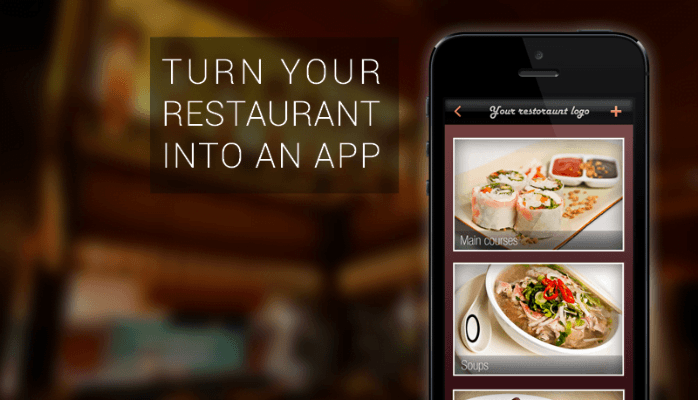
Reasons Why Your Restaurant Needs an App
Keyur Patel
September 12, 2025
6 min
Last Modified:
March 11, 2026
Restaurants rarely reach out because business has stopped. They reach out because operations feel heavier than they should.
Orders come in from multiple channels. Phone calls overlap with dine-in service. Delivery platform notifications interrupt preparation. Staff confirm payment screenshots while customers wait at the counter. At closing time, someone stays back to reconcile mismatched totals.
Nothing is technically broken. But everything requires extra effort.
After working with restaurant teams across different formats, the pattern is consistent. When ordering, payments, and communication are spread across disconnected systems, inefficiencies compound. The food may be excellent. The brand may be strong. But daily coordination becomes harder than necessary.
This is where a Restaurant app stops being a feature and starts becoming operational infrastructure. It creates one controlled layer where ordering, loyalty, analytics, and communication work together instead of separately.
What Peak Hours Actually Reveal
Peak periods reveal structural deficiencies more quickly than anything else
In the absence of a systematic system, the normal evening appearance is as follows:
- Orders are written down manually and repeated to avoid mistakes
- Customisations are clarified verbally between staff and kitchen
- Payment confirmations delay preparation
- Customers call back asking for delivery updates
- Front-of-house and kitchen coordination becomes reactive
The team works harder, but the system does not support them.
Now compare that to an environment where mobile ordering flows through a dedicated mobile app.
Customers select their own item modifications clearly. Payment is completed before the order enters the kitchen queue. Orders move digitally in sequence. Status updates reduce inbound calls. Staff focus on preparing and serving instead of clarifying and confirming.
The difference is not dramatic in theory. It is practical in execution. Restaurants notice it within days of implementation.
Why Relying Only on Aggregators Limits Growth
Delivery platforms are powerful tools for reach. They drive visibility and help restaurants access new customers. However, relying exclusively on them creates structural limitations.
When most digital activity flows through third-party platforms:
- Commission affects margin on every order
- Direct customer data remains limited
- Promotions depend on paid boosts
- Competitors appear beside your listing
We have seen restaurants increase order volume while struggling to protect profitability because too much business is platform-driven.
A dedicated Restaurant app shifts some of that activity back into your own ecosystem. Orders placed directly provide access to purchase history, repeat patterns, and customer behaviour. Engagement becomes measurable and actionable.
This is where Restaurant marketing becomes strategic. Instead of offering blanket discounts, restaurants can activate specific customer groups during specific time windows based on real data.
The goal is not to eliminate aggregators. It is to balance dependency.
Revenue Stabilises When Ordering Becomes Routine
Revenue unpredictability is one of the most common concerns we hear.
Weekend spikes are strong. Weekday afternoons are slow. Promotions create temporary lifts but little sustained behaviour.
When customers regularly use a mobile app, small but meaningful shifts happen. Saved preferences reduce hesitation. Checkout becomes faster. Reordering requires fewer steps. That ease builds habit.
Restaurants leverage this structure to:
- Target slower periods with in-app campaigns
- Highlight high-margin dishes within the ordering interface
- Encourage add-ons during checkout without heavy discounting
Over time, revenue becomes less dependent on external visibility and more influenced by customer behaviour.
Loyalty That Works Within the Ordering Flow
Loyalty programs often begin with enthusiasm and gradually lose participation. The issue is rarely the reward itself. It is the extra effort required to redeem it.
When loyalty relies on physical cards or manual validation, friction builds. Staff forget. Customers forget. The system weakens.
When loyalty is integrated into a Restaurant app, the process becomes automatic. Points accumulate without intervention. Rewards appear at checkout. Customers can track progress anytime.
There is no separate system to manage. Retention improves because the experience remains seamless.
Repetition is absorbed in systems which enhances operational efficiency
In most restaurants, employees use a large part of their time correcting problems that might have been avoided.
These include:
- Reconfirming handwritten orders
- Clarifying delivery addresses
- Checking payment screenshots
- Reconciling discrepancies at closing
These are workflow problems, not performance problems.
When structured restaurant technology centralises ordering and payments, digital tickets reduce ambiguity and payment logging becomes automatic. Reporting becomes clearer and faster. Closing procedures shorten.
The shift does not change the cuisine. It changes how smoothly the business runs.
Customer Experience Is Defined by Ease
Modern customer experience is rarely about dramatic gestures. It is about how much effort the customer has to make.
When it is necessary to make an order twice and wait until it is made, friction accumulates over a certain time.The grievances of the customers are not visible instantly, yet the experience is heavier.
Conversely, when the ordering is done within a designed interface with saved preferences and live updates, the experience becomes a light and smooth one.
That reliability influences whether customers return.
Restaurants often underestimate how much simplicity affects loyalty.
Data Turns Observation Into Strategy
Without direct ordering data, decisions rely heavily on instinct, by questions arising as:
Which dishes drive the highest margin?
Which hours need activation?
Which campaigns convert consistently?
When activity flows primarily through third-party platforms, visibility remains partial.
When a restaurant owns its digital channel, performance patterns become measurable. Peak demand windows are clear. Repeat frequency can be tracked..The performance of campaigns is measurable. This enables restaurants to modify staffing, pricing as well as marketing according to the actual evidence.
Scaling Needs Infrastructure.
Expanding the store to the second one or a delivery-oriented kitchen is an operation that is easily complicated.
Without centralised systems:
- Menu updates must be handled across multiple platforms
- Campaigns lack coordination
- Reporting differs between outlets
- User access becomes harder to manage
With a unified Restaurant app:
- Menu changes deploy centrally
- Campaigns launch across locations simultaneously
- Performance comparisons become consistent
- User roles can be structured more clearly
Expansion becomes controlled rather than reactive.
Digital Capability Now Influences Brand Perception
The quality of food is not enough to make a restaurant stand out in the competitive market.
The accessibility and reliability are also considered more by customers. The restaurants that provide order taking services via apps seem well arranged and attentive. Those that are purely manually coordinated seem to be slower, despite the food being good.
The difference may be subtle, but subtle differences influence choice.
Digital infrastructure is now part of brand identity.
The Strategic Decision
Smartphone-based ordering is no longer optional. Customers already expect digital interaction.
The question which the restaurants will have to answer is whether the contact with the customers will continue being decentralised on the external mediums, or it will be centralised on a controlled network.
An effective restaurant application unites the process of ordering, loyalty, analytics, and communication into a single logical system. It minimizes the friction in operations. It strengthens engagement. It encourages sustainable development.
At IT Path Solutions, restaurant applications are created with daily activities as well as peak-hour realities, which guarantee that technology does not complicate operations, but instead supports technology in daily operations.

Keyur Patel
Co-Founder
Keyur Patel is the director at IT Path Solutions, where he helps businesses develop scalable applications. With his extensive experience and visionary approach, he leads the team to create futuristic solutions. Keyur Patel has exceptional leadership skills and technical expertise in Node.js, .Net, React.js, AI/ML, and PHP frameworks. His dedication to driving digital transformation makes him an invaluable asset to the company.
Related Blog Posts
DevExpress Web Reporting: A Complete Guide to Browser-Based Reporting
Build an App Like TaskRabbit With AI (2026): Cost, Features & Top Alternatives