Supabase Free Tier Limits: What You Actually Need to Know in 2026

Keyur Patel
May 28, 2026
11 min
Last Modified:
September 21, 2026
Supabase’s Free plan includes two active projects, a 500 MB database per project, 1 GB file storage, 50,000 monthly active users, 5 GB egress and unlimited API requests. Free projects may pause after one week of inactivity. The table below shows the complete limits, followed by what happens when you reach them and when upgrading to Pro makes sense.
If a free Supabase project stays inactive for 7 days, Supabase automatically pauses it. This happens because free projects run on shared infrastructure, and keeping unused projects active still costs resources. Pausing inactive projects helps Supabase maintain its free tier sustainably.
When a project is paused, it does not count against your 2-project limit. However, it becomes completely unavailable until you log into the Supabase dashboard and manually unpause it.
The honest reality is that this pause is a genuine operational problem for projects with irregular traffic. If you are building an internal tool that your team uses a few times a week, or a side project you check on weekends, your project can pause between sessions. That is a real disruption, and it is worth planning for.
The 3 Keep-Alive Workarounds (And What Each One Costs You)
All three options below prevent the pause by sending a database request before the 7-day window closes. None of them are perfect, and all of them add something to maintain.
Workaround 1: Cron Job Ping
Set up a scheduled script that sends a lightweight query, such as a simple SELECT, to your Supabase database every 5 to 6 days. Setup takes around 15 minutes. The risk is that this workaround depends entirely on your cron host staying online. If the cron service goes down, your project still pauses.
Workaround 2: GitHub Actions Scheduled Workflow
Create a .github/workflows YAML file with a schedule trigger that runs a curl command or Supabase CLI command against your project. Setup takes around 20 minutes. The workflow is version-controlled, and GitHub Actions uptime is generally reliable.
If your repo is public, this runs for free.
If your repo is private, it counts against your GitHub Actions minutes, which have their own free tier limit. Verify your usage before relying on this for a private repo.
Note that GitHub integration became available on the free plan in April 2026, so this workaround no longer requires a Pro subscription.
Workaround 3: Uptime Robot Monitor
Configure a free HTTP monitor in Uptime Robot pointing at your Supabase project URL. It pings every 5 minutes by default. Setup takes around 5 minutes and requires no code. Uptime Robot’s free tier supports up to 50 monitors. The downside is that you are adding another third-party service to your stack, and Uptime Robot’s free tier has its own limits.
All three workarounds are reasonable for genuine side projects and MVPs in active development. They are not appropriate for any project where uptime reliability actually matters to real users.
When to Stop Going For Work Arounds and Just Upgrade
The Supabase Pro plan costs $25 per month per project. Upgrading removes the inactivity pause entirely. It also adds daily backups and email support.
Upgrade when any of these conditions are true: the workaround is taking more than 30 minutes per month to maintain, your project has real users who will notice downtime, or uptime has started to matter for your use case.
Do not upgrade just because of the pause if your project is genuinely low-stakes. A developer with a hobby project and 20 minutes to set up a GitHub Actions workflow does not need to pay $25 per month.
Also note that the pause is not the only reason to upgrade. If you are hitting the 500MB database storage limit or approaching 50,000 monthly active users, those limits are the real signal to upgrade, not the pause. The Pro plan raises both of those ceilings significantly.
If you are reconsidering Supabase entirely, see our list of Supabase alternatives worth considering.
What Changed for Free Tier Users in 2026
The core free tier limits, which are 500MB database storage, 50,000 monthly active users, and 5GB outbound bandwidth, have not changed in 2026.
Two updates are worth knowing about.
- First, GitHub integration is now available on all plans including free, as of April 2026. This makes the GitHub Actions workaround accessible without a Pro subscription.
- Second, Supabase is rolling out a change to how tables are exposed through the Data API.
New projects created after May 30, 2026 must add explicit Postgres grants for PostgREST access. Existing free projects are affected from October 30, 2026. If your project queries data through the auto-generated REST API, check whether you need to add explicit grants before that date. Confirm the exact scope of this change for your specific project before October 30.
The Actual Limits at a Glance (2026)
| Resource | Free Tier Limit |
|---|---|
| Database storage | 500MB |
| RAM (shared compute) | 500MB |
| Monthly active users | 50,000 |
| File storage | 1GB |
| Outbound bandwidth | 5GB |
| Edge Function invocations | 500,000 per month |
| API requests | Unlimited |
| Active projects | 2 |
| Inactivity pause | After 7 days |
| Backups | 7-day snapshot |
| Commercial use | Permitted |
| Credit card required | No |
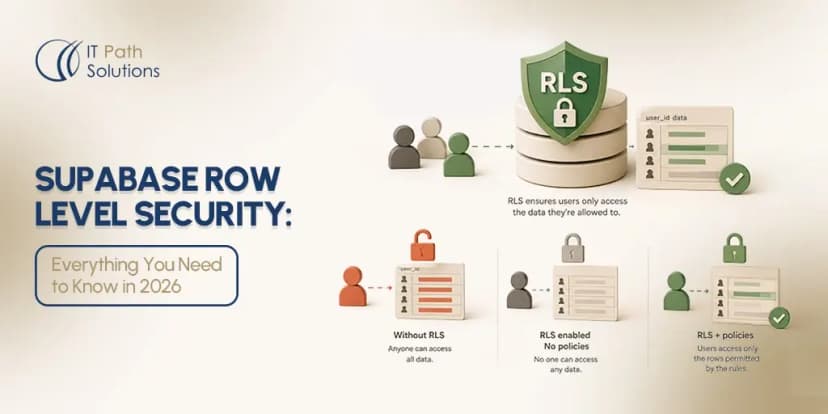
Row Level Security is available on the free tier. If you are running into RLS policy issues, see our guide on how to fix Supabase RLS errors. pgvector is also included on all plans including free, which is useful if you are building with AI embeddings.
What Happens When You Reach a Supabase Free Tier Limit?
Not every Supabase limit behaves the same way. Some limits restrict what you can use, while others determine when paid usage or a plan upgrade becomes necessary.
Database reaches 500 MB
The Free plan includes 500 MB of database storage per active project. If your database is approaching this limit, you need to reduce the amount of stored data or move to a paid plan with a larger included disk allowance.
Pro includes 8 GB of disk size per project before additional usage is billed.
File storage reaches 1 GB
Supabase Storage includes 1 GB on the Free plan. If your application stores images, videos, documents, or other files, this limit can become significant before the database limit does.
If storage growth is part of your application architecture, monitor usage rather than waiting until the project reaches its limit.
Egress exceeds 5 GB
The Free plan includes 5 GB of egress. Egress is outbound data transferred from your Supabase project.
On paid plans, Supabase includes a larger quota and bills usage above that quota according to its current pricing. The Free plan should therefore be treated as a fixed included allowance rather than an unlimited bandwidth plan.
Monthly active users exceed 50,000
The Free plan includes 50,000 monthly active users. Pro increases the included allowance to 100,000 MAU and then charges for additional MAU according to the current pricing.
For applications experiencing rapid user growth, MAU is one of the limits worth monitoring before moving into production.
Edge Function usage exceeds 500,000 invocations
The Free plan includes 500,000 Edge Function invocations. Pro includes 2 million and then applies usage-based pricing above the included quota.
If Functions are being called frequently by scheduled jobs, APIs, or frontend requests, monitor invocation volume as part of your normal production usage review.
Realtime usage exceeds the Free allowance
The Free plan includes 2 million Realtime messages per month and 200 peak concurrent connections.
Applications with chat, live dashboards, collaborative features, notifications, or other highly interactive functionality should monitor both message volume and concurrent connections rather than looking only at database size.
You reach the two-project limit
The Free plan allows two active projects. Paused projects do not count toward the Free project limit.
If you need more active Free projects, you may need to consolidate projects or move an organization to a paid plan.
Your project becomes inactive
This works differently from a normal usage quota. Supabase can automatically pause Free projects that have low database activity over a 7-day period.
A paused project can be restored from the Supabase Dashboard. Supabase states that paid projects are not subject to automatic inactivity pausing.
Does Supabase Free Tier Pause Inactive Projects?
One of the most important differences between Supabase Free and paid plans is project inactivity.
Supabase can automatically pause Free Plan projects that have low database activity over a 7-day period. This is separate from reaching a storage, bandwidth, or database-size limit. A project can be well within its usage quotas and still be paused if it has insufficient database activity.
Supabase says projects with too few user queries during the previous week are the clearest candidates for pausing. The documentation does not define this as a simple fixed number of requests that guarantees a project will remain active.
If your project is paused, you can restore it from the Supabase Dashboard. Supabase also provides a one-year restoration window for paused projects.
Paid-plan projects are not subject to automatic inactivity pausing.
Last verified: September 2026
Ship Faster with IT Path Solutions
If you are spending time managing keep-alive scripts and infrastructure workarounds, that time is not going into your product. IT Path Solutions helps early-stage teams build and ship faster without getting stuck on backend configuration.
Know more about how we work with our ship faster projects at IT Path Solutions.
Supabase Free vs Pro: What’s the Difference?
| Feature | Free | Pro |
|---|---|---|
| Monthly price | $0 | From $25/month |
| Active projects | 2 | Higher project capacity |
| Database size | 500 MB/project | 8 GB/project included |
| Monthly active users | 50,000 | 100,000 included |
| File storage | 1 GB | 100 GB included |
| Egress | 5 GB | 250 GB included |
| Cached egress | 5 GB | 250 GB included |
| Edge Function invocations | 500,000 | 2 million included |
| Realtime messages | 2 million | 5 million included |
| Peak Realtime connections | 200 | 500 included |
| Automatic backups | Not included | Daily backups, 7-day retention |
| Inactivity pausing | Yes | No |
| Support | Community | |
| Advanced disk configuration | No | Yes |
The Pro plan also supports usage above several included quotas at additional rates. Supabase’s current pricing should be checked before estimating production costs because usage-based charges and plan features can change.
Frequently Asked Questions
Is Supabase free tier forever?
Yes. Supabase’s free tier has no time limit and requires no credit card. Projects remain on the free plan indefinitely as long as you stay within the resource limits, which are 500MB database storage, 50,000 monthly active users, and 5GB outbound bandwidth. The only caveat is that individual free projects pause automatically after 7 days without a database request. You need to manually unpause them through the Supabase dashboard.
Does Supabase free tier pause projects?
Yes. Any free tier project that receives no database requests for 7 consecutive days is automatically paused by Supabase to reclaim shared compute resources. The project does not count against your 2-project limit while paused, but it will be unavailable until you log in to the Supabase dashboard and manually unpause it. Three workarounds can prevent the pause: a cron ping, a GitHub Actions scheduled workflow, or an Uptime Robot monitor.
What are the limits of Supabase free tier?
Supabase’s free tier in 2026 includes 500MB database storage, 500MB shared RAM, 50,000 monthly active users, 1GB file storage, 5GB outbound bandwidth, 500,000 Edge Function invocations per month, and unlimited API requests. You can have up to 2 active projects. Free projects pause after 7 days of inactivity. Commercial use is permitted and no credit card is required. The core resource limits have not changed in 2026.
Is Supabase free tier for commercial use?
Yes. Supabase explicitly permits commercial use on the free tier. You can launch a real product and serve paying customers without upgrading. The practical constraints are operational, not legal. The 7-day inactivity pause, the 500MB database cap, and the 50,000 monthly active user limit are the points where a commercial project typically needs to upgrade to Supabase Pro at $25 per month per project.
Did Supabase change its free tier in 2026?
The core resource limits, which are 500MB database storage, 50,000 monthly active users, and 5GB bandwidth, remain unchanged in 2026. Two updates affect free tier users. GitHub integration is now available on all plans including free, as of April 2026. A new explicit Postgres grants requirement for the Data API is rolling out for new projects from May 30, 2026 and for existing projects from October 30, 2026. Confirm how this affects your specific project before the October 30 deadline.
How does Supabase free tier compare to Firebase?
Supabase’s free tier offers a dedicated Postgres database, Row Level Security, and 50,000 monthly active users. Firebase’s Spark plan uses a NoSQL Firestore model with different read and write quotas. Supabase’s primary operational disadvantage is the 7-day inactivity pause, which Firebase does not impose. For teams comfortable with SQL and open-source tooling, Supabase’s free tier is generally considered more capable for structured data use cases. Verify current Firebase Spark plan limits before making a direct comparison, as those figures change independently.
Need Help With Your Supabase Project?
If your Supabase project is approaching its limits or moving toward production, IT Path Solutions can help with Supabase architecture, migrations, performance optimization, and production readiness.
From improving an existing setup to preparing your application to scale, we can help you build a reliable Supabase foundation for long-term growth.
Talk to IT Path Solutions about your Supabase project.
Keyur Patel
Co-Founder
Keyur Patel is the director at IT Path Solutions, where he helps businesses develop scalable applications. With his extensive experience and visionary approach, he leads the team to create futuristic solutions. Keyur Patel has exceptional leadership skills and technical expertise in Node.js, .Net, React.js, AI/ML, and PHP frameworks. His dedication to driving digital transformation makes him an invaluable asset to the company.
Related Blog Posts

How RivalRadar Uses AI Agents to Track Competitors Automatically

How to Build an AI Influencer Platform in 2026: The Next Frontier for Brands, Creators, and Digital Product Teams